
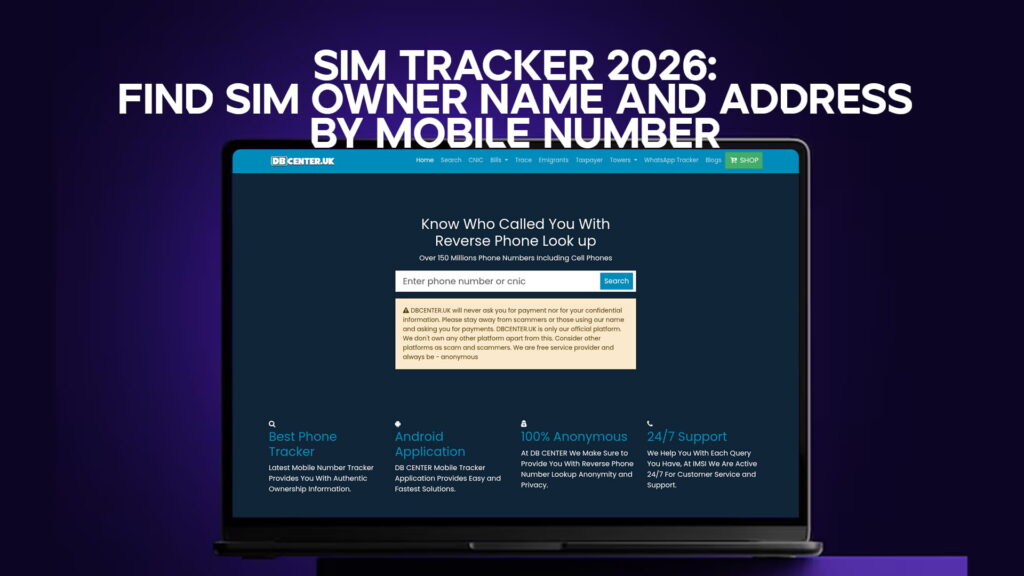
Someone calls you from a number you don’t recognize. You ignore it once. They call again. You start to wonder — who is this, and why do they keep calling? It’s a situation most people deal with more often than they’d like. In 2026, with spam calls, scam rings, and robodialers at an all-time high, knowing who owns a mobile number is not just convenient — it’s something a lot of people genuinely need.
That’s exactly what a SIM tracker does. And before anyone gets the wrong idea — this isn’t about secretly monitoring someone’s phone. It’s about reverse phone lookup: entering a mobile number and finding out the name, general location, or address linked to the SIM card registered under that number. DB Center makes this straightforward, pulling from a database of over 150 million phone numbers, including mobile numbers that traditional directories don’t cover.
This article walks through everything — how SIM tracking works, why people use it, what you can realistically expect from a lookup, and how DB Center compares to other options in 2026.
What Is a SIM Tracker, Really?
The term “SIM tracker” gets thrown around loosely online, and it means slightly different things depending on the context. In the most common usage — the one this article is about — a SIM tracker is a reverse phone lookup tool. You enter a mobile number, and the tool tells you who it’s registered to.
The name comes from how mobile numbers work. Every SIM card is tied to a registered user when it’s activated. That registration includes a name, sometimes an address, and carrier information. When you look up a number through a reverse lookup service, the tool cross-references its database against this kind of data, plus public records, business directories, and in some cases, user-submitted information.
What it does not do — and this is worth being clear about — is give you real-time location tracking. That’s a different technology entirely, requires law enforcement-level access, and is not something a public lookup service provides. What you get with a SIM tracker in 2026 is identification data: who owns this number, what carrier it belongs to, what name or business it’s registered under, and often a general address.
For most people’s purposes, that’s exactly what they need.
Why People Look Up Mobile Numbers in 2026
The reasons people search for SIM owner information are usually pretty ordinary. Here are the most common ones:
Missed or unknown calls. You see a missed call from a number that isn’t saved in your phone. Before you call back, you want to know who it is. This is probably the single biggest use case for reverse phone lookup tools.
Suspicious messages. You receive a text claiming to be from your bank, a delivery service, or a government agency. The number doesn’t look right. Running it through a lookup tool can quickly tell you whether it’s connected to a known business or whether it looks like a spoofed or scam number.
Reconnecting with people. Someone left their number and you lost the name. Or you found an old number in your contacts with no label. Looking it up can save you an awkward phone call.
Verifying someone’s identity. If you’re meeting someone from an online marketplace, a freelance platform, or a dating app, checking that their number is real and linked to who they say they are is a reasonable safety step.
Business purposes. Companies that receive inbound calls often want to know more about who’s calling before responding. Reverse lookup adds a layer of context that helps with customer service and fraud prevention.
Dealing with harassment. If you’re receiving repeated unwanted calls, identifying the source is often the first step toward doing something about it — whether that’s blocking the number, reporting it, or in serious cases, involving authorities.
None of these are unusual situations. They’re the kinds of things people deal with every week, and having a reliable way to look up who’s behind a number makes a real difference.
How Reverse Phone Lookup Works
When you enter a number into a service like DB Center’s phone trace tool, you’re not querying a live government database or hacking into a carrier’s records. The way public reverse lookup services work is more straightforward than that.
These services build and maintain large databases of phone number information gathered from a range of legitimate sources. These sources include public records, business registration data, directory listings, carrier information, and in some cases, aggregated data that phone owners have at some point made publicly available. Over time, these databases grow large enough to cover a substantial portion of active numbers — in DB Center’s case, that’s over 150 million entries.
When you run a search, the tool matches your input against its database and returns whatever information is linked to that number. The quality of the result depends on how complete the data is for that specific number. For landlines and registered business numbers, the data is often very detailed. For mobile numbers, results vary — some come back with full name and address details, while others might only return the carrier and general location.
The process is usually fast. Most lookups return results in seconds. And on a platform like DB Center, the interface is designed to be clear and easy to use — you don’t need to know anything about databases or data sources. You just enter the number and see what comes back.
What Information Can You Find About a SIM Owner?
This depends on the number, but here’s a general breakdown of what a reverse phone lookup can typically return:
Owner’s full name. For registered SIM cards tied to an individual, the name on the registration often shows up. This is more consistent for business numbers than personal ones.
Address. General address information — sometimes as specific as a street address, sometimes just a city or region — is often available, especially for numbers with a long registration history.
Carrier and network. Which mobile network or telecom provider the number belongs to. This is useful for identifying virtual numbers, prepaid SIMs, or VoIP lines that are commonly used in scam operations.
Number type. Whether the number is a landline, mobile, or VoIP/virtual number. Scammers frequently use VoIP numbers because they can be set up quickly and anonymously — knowing a number is VoIP can be a useful flag.
Location data. Area code and geographic information based on where the number is registered. This won’t tell you where someone is right now, but it tells you where the number was originally set up.
Spam reports. Many lookup platforms, including DB Center, incorporate community-reported data. If other users have flagged a number as spam or a scam, that information often appears alongside the registration details.
Not every lookup will return all of this. Some numbers — particularly newer prepaid SIMs or numbers registered under minimal personal information — may return limited results. But for a large portion of the numbers people actually need to look up, meaningful information is available.
DB Center: What Makes It Different
There are a handful of reverse phone lookup services in 2026, so it’s worth explaining what sets DB Center apart and why it’s worth using.
The first thing is the size of the database. With over 150 million phone numbers — including mobile numbers, which many older directory services excluded — the coverage is substantial. That matters because the usefulness of any lookup tool is directly tied to whether your specific number is in the database. A larger database means better odds of getting a real result.
The second thing is ease of use. DB Center is built around a simple premise: you have a number, you want to know who it belongs to. The search interface at dbcenter.uk/search is clean and direct. You enter the number, you get results. There’s no need to sign up for an account to run a basic search, and the results are presented in a format that’s easy to read.
Third is the trace feature. For more detailed lookups — situations where you need to dig deeper than a standard name search — the trace tool at dbcenter.uk/trace provides extended information. This is particularly useful for numbers that keep calling without leaving a message, or numbers linked to potential fraud that you want to document properly.
Fourth is the combination of registered data and community reports. DB Center doesn’t just rely on one source. The platform pulls from both formal registration data and user-submitted reports, which means the information is regularly updated and reflects current usage patterns — not just outdated directory entries.
Is It Legal to Look Up a SIM Owner?
Yes, in most countries and jurisdictions, using a reverse phone lookup service to identify who owns a mobile number is entirely legal. The data these services use comes from public records and other legitimate sources. You’re not accessing private communications, intercepting calls, or doing anything that would cross legal or ethical lines.
That said, the purpose matters. Looking up a number because you got an unexpected call, want to verify a contact, or are concerned about fraud is perfectly reasonable and widely accepted. Using the information to harass, stalk, or intimidate someone is not — and would put you in legal trouble regardless of how you obtained the information.
For most people, the intended use is benign. You want to know who’s calling you. That’s a legitimate thing to want to know, and tools like DB Center exist precisely to help with that.
Tips for Getting the Best Results from a Mobile Number Lookup
Getting useful results from a reverse phone lookup isn’t complicated, but a few things help:
Always use the full number format. Include the country code when searching international numbers. Missing the country code is a common reason searches return no results.
Try the trace tool if the standard search returns limited data. The standard search is fast and covers most cases. For numbers that return incomplete results, the trace tool often pulls from additional sources.
Look at the number type first. If a result shows that a number is a VoIP or virtual number with no registered name, that itself is useful information — it’s a pattern commonly associated with spam and scam operations.
Check community reports alongside registration data. Even if a number comes back registered to a real person or business, user reports can tell you whether other people have received unwanted calls from the same number.
Note the date of the data. Phone numbers change hands. Someone who registered a number two years ago might not be the person using it today. If the registration data seems inconsistent with the calls you’ve been receiving, factor in that the number may have been transferred or reassigned.
Common Misconceptions About SIM Trackers
A few things people often get wrong:
“A SIM tracker can show me where someone is right now.” No. Real-time location tracking requires carrier-level access and in most countries is restricted to law enforcement with proper authorisation. A reverse phone lookup gives you registration data, not a live location.
“The results are always 100% accurate.” Registration data is only as current as the last update in the database. Numbers get transferred, SIMs get deactivated and reissued, and prepaid accounts sometimes register under minimal information. Most lookups on established numbers return accurate information, but treat every result as a strong lead rather than a definitive fact.
“Free lookup tools are just as good as paid services.” Some are, for basic queries. But free tools often have smaller databases, slower updates, and less coverage of mobile numbers specifically. If you’re looking for reliable results across a wide range of numbers, a service with a large, well-maintained database is worth using.
“This is only useful for personal situations.” Businesses use reverse lookup regularly — for verifying customer information, screening inbound contacts, and identifying potential fraud. It’s a tool with applications across both personal and professional contexts.
How to Trace a Mobile Number Step by Step
For anyone new to using a reverse lookup tool, here’s a simple walkthrough using DB Center:
- Go to dbcenter.uk/search.
- Enter the full mobile number in the search field, including the country code if it’s an international number.
- Hit search and wait for results — this usually takes just a few seconds.
- Review the information returned: owner name, address, carrier, number type, and any community-flagged reports.
- If the standard search returns limited data, head to dbcenter.uk/trace for an extended trace.
- Use the information to decide whether to call back, block the number, or report it if it’s linked to known spam activity.
That’s genuinely all there is to it. The process is designed to be accessible to anyone, not just people who are technically comfortable with lookup tools.
Staying Safe in 2026: Why This Matters More Than Ever
Phone-based scams are more sophisticated in 2026 than they’ve ever been. AI-generated voice calls can convincingly impersonate real people. Caller ID spoofing makes it easy for fraudsters to display a legitimate-looking number. Robocall operations run millions of calls a day, targeting people across every demographic.
In this environment, the ability to verify who is behind a number before you engage is a meaningful safety advantage. It’s not about being paranoid — it’s about being informed. Checking a number before returning a call from an unknown source takes about thirty seconds and can save you from giving sensitive information to someone with bad intentions.
DB Center’s database of over 150 million numbers, combined with active community reporting, means the platform reflects current phone usage patterns rather than static old directories. That makes it one of the more reliable tools available for this purpose in 2026.
Yes, basic reverse phone lookups are available for free on platforms like DB Center. By entering a mobile number at dbcenter.uk/search, you can retrieve the owner’s name, carrier details, and location information without any cost. For deeper results — such as a full address or extended trace — the dedicated trace tool at dbcenter.uk/trace provides more comprehensive data.
Yes, in most countries it is completely legal to use a reverse phone lookup service to identify who owns a mobile number. These platforms use publicly available records and registered directory data. The key is intent — using the information to identify an unknown caller or verify a contact is lawful, while using it to harass or stalk someone is not.
The quickest way is to run the number through a reverse lookup tool. Head to DB Center, enter the full number including the country code, and the results will typically show the registered owner’s name, their general address, the carrier the SIM belongs to, and whether other users have flagged it as spam. The whole process takes under a minute.
No. A SIM tracker in the context of reverse phone lookup shows you registration data — the name, address, and carrier tied to a SIM card when it was set up. Real-time location tracking is a completely different technology that requires carrier-level access and is generally restricted to law enforcement with proper legal authority. What you get from a lookup service is identification information, not a live location.
A search on DB Center can return the registered owner’s full name, address, mobile network or carrier, number type (mobile, landline, or VoIP), and general geographic location. The platform also surfaces community-submitted spam reports, so if a number has been flagged by other users as a scam or robocall source, that information will appear alongside the registration details. With over 150 million numbers in the database, coverage is strong across both personal and business mobile numbers.
Final Thoughts
Knowing who’s calling you is a basic thing. It shouldn’t be complicated. And in 2026, with the tools available through a service like DB Center, it doesn’t have to be. Whether you’re trying to identify a persistent unknown caller, verify someone you’re about to meet, or just check whether a suspicious text came from a real business, a reverse phone lookup gives you the information you need quickly and clearly.
The process is legal, straightforward, and available to anyone who needs it. If you’ve got an unknown number sitting in your missed calls right now, there’s no reason not to check — start with DB Center’s search tool and see what comes back.